
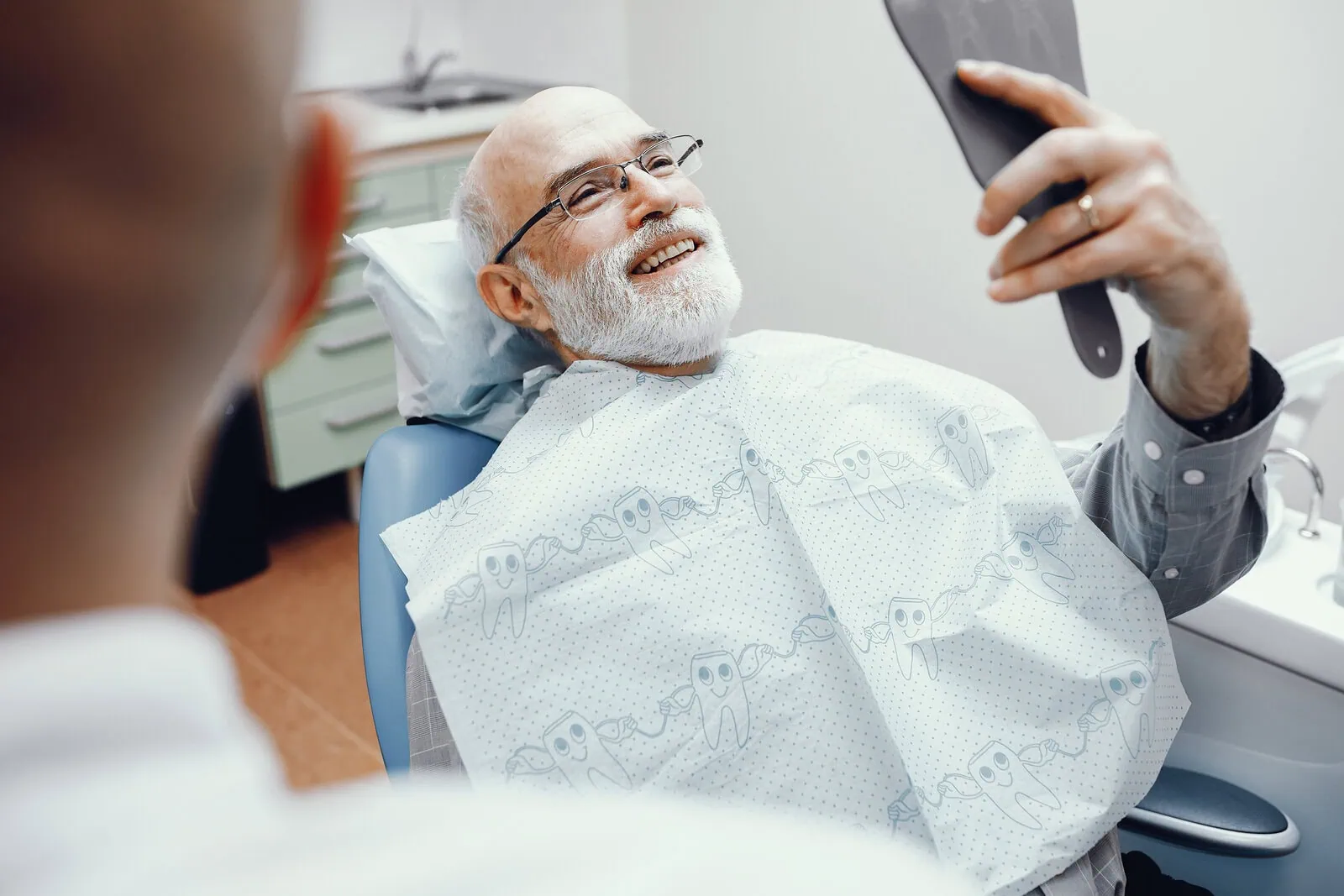
Why Implant-Supported Dentures Change Everything
Traditional dentures rest on your gums. Over time, your jawbone can shrink because it no longer gets the stimulation it needs from tooth roots. Implant-supported dentures anchor to small titanium posts placed in your jaw, so they hold still while you eat, talk, and laugh. That stability does more than stop slipping and clicking.
Implants placed in your jawbone help preserve bone density, because the posts provide the same kind of stimulation your natural tooth roots once did. This helps protect your facial structure over time, so your face keeps its shape instead of the sunken look that can come with long-term bone loss. Patients tell us they can eat the foods they missed, corn on the cob, steak, crisp apples, without worrying the denture will move. And because the denture stays put, speaking feels natural again too. Over the long run, that stability also means less irritation and fewer sore spots from a denture rubbing against your gums.
What Makes Them Different from Traditional Snap-In or Removable Dentures
Conventional dentures rely on suction, adhesive paste, or the shape of your gums to stay in place. Snap-in dentures in Michigan, a term we hear often from patients, clip onto a small number of implants using small attachments, so the denture “snaps” into place but can still be removed for cleaning. Implant-retained dentures in Michigan take that idea further, sometimes using more implants and a bar or attachment system that holds the denture even more firmly, with less need for daily removal. Both rely on implants rather than gum tissue alone, which is the biggest difference from a conventional plate.
What Happens When You Keep Living with Loose Dentures
Putting off treatment doesn’t keep things the same. It usually makes things harder. Loose dentures let your jawbone keep shrinking, which changes your bite and makes the denture fit even worse over time. That cycle can push people toward softer, less nutritious foods, which affects overall health. Many patients also start avoiding social situations, like meals out or family gatherings, because they worry about a denture slipping at the wrong moment. The longer this goes on, the more your bone changes shape, which can make future implant placement more complex and may call for grafting before implants can be placed.